125 minutes
From Lina Wertmüller, the groundbreaking filmmaker who became the first woman ever nominated for the Academy Award for Best Director in 1977 and opened doors for generations of women directors, comes a daring tale where, under Fascism, love itself becomes the most subversive act of all.
Part of the Honoring The Twin Cities Program
+ Intro and post-screening analysis with Richard Peña, Emeritus Professor, Columbia University and Director Emeritus, New York Film Festival.
+ Q&A moderated by Richard Peña with Tommaso Cammarano, IFF’s Artistic Director
ABOUT THE FILM
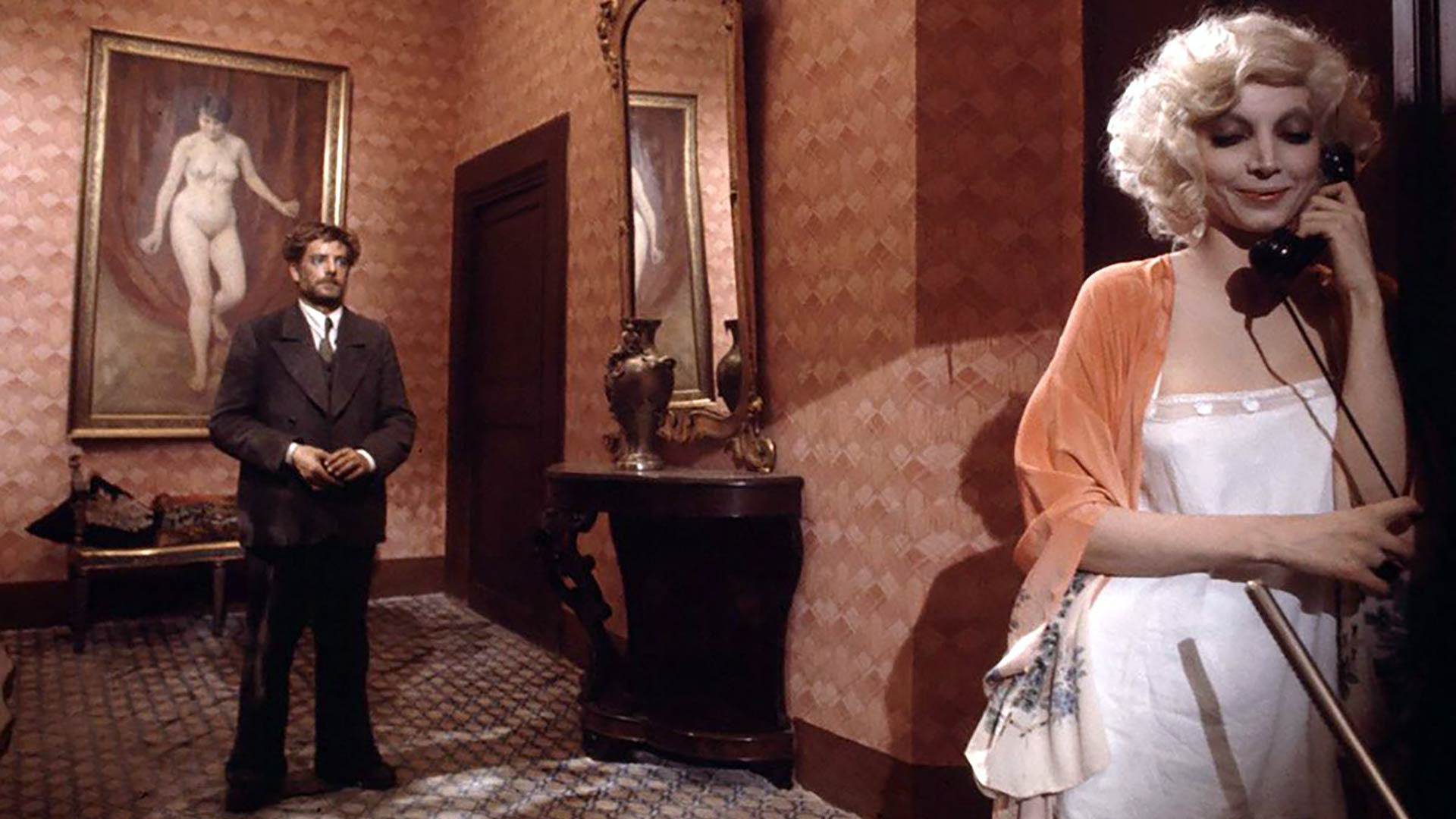
Set in 1930s Italy under Mussolini’s regime, “Film d’amore e d’anarchia” follows Tunin, a simple, idealistic peasant who arrives in Rome with a single mission: to assassinate the Duce. Hiding in a state-controlled brothel while awaiting his moment, he meets Salomè, a disillusioned prostitute who has long since learned how to survive in a world ruled by hypocrisy and fear. What begins as a political plot slowly transforms into an intimate, fragile bond between two unlikely allies.
Blending tragicomedy, political satire, and tender romance, Lina Wertmüller crafts a bittersweet, deeply humane story where grand revolutionary ideals collide with human vulnerability, revealing the everyday compromises of life under dictatorship while honoring the quiet dignity of those who resist in small, deeply personal ways.
Monica Vitti (1931–2022) was an Italian actress known for her starring roles in films directed by Michelangelo Antonioni during the early to mid-1960s. After working with Antonioni, Vitti changed focus and began making comedies, working with director Mario Monicelli on many films. She appeared with Marcello Mastroianni, Alain Delon, Richard Harris, Terence Stamp, and Dirk Bogarde. She was known as the “Queen of Italian cinema.” Vitti won five David di Donatello Awards for Best Actress, seven Italian Golden Globes for Best Actress, the Career Golden Globe, and the Venice Film Festival Career Golden Lion Award.
DIRECTOR’S BIO:
Lina Wertmüller (1928–2021) was one of Italy’s most distinctive and provocative filmmakers, known for blending biting political satire with bold, emotionally charged storytelling. A former assistant to Federico Fellini, she emerged in the 1960s and 70s as a fearless voice in European cinema, tackling themes of class struggle, gender dynamics, power, and ideology with irreverent humor and theatrical flair.
Her international breakthrough came with a series of films starring Giancarlo Giannini, including “Mimì metallurgico ferito nell’onore” (1972), “Film d’amore e d’anarchia” (1973), and “Travolti da un insolito destino nell’azzurro mare d’agosto” (1974). In 1977, she became the first woman ever nominated for the Academy Award for Best Director for “Pasqualino Settebellezze” (1975). Wertmüller’s work is marked by its operatic style, moral complexity, and sharp critique of social and political systems.
In 2019, she received an Honorary Academy Award for her lifetime contribution to cinema. Today, Wertmüller is celebrated as a pioneer who opened doors for generations of women directors and left an indelible mark on world cinema.
Relased 1973
Directed by Lina Wertmüller