95 minutes
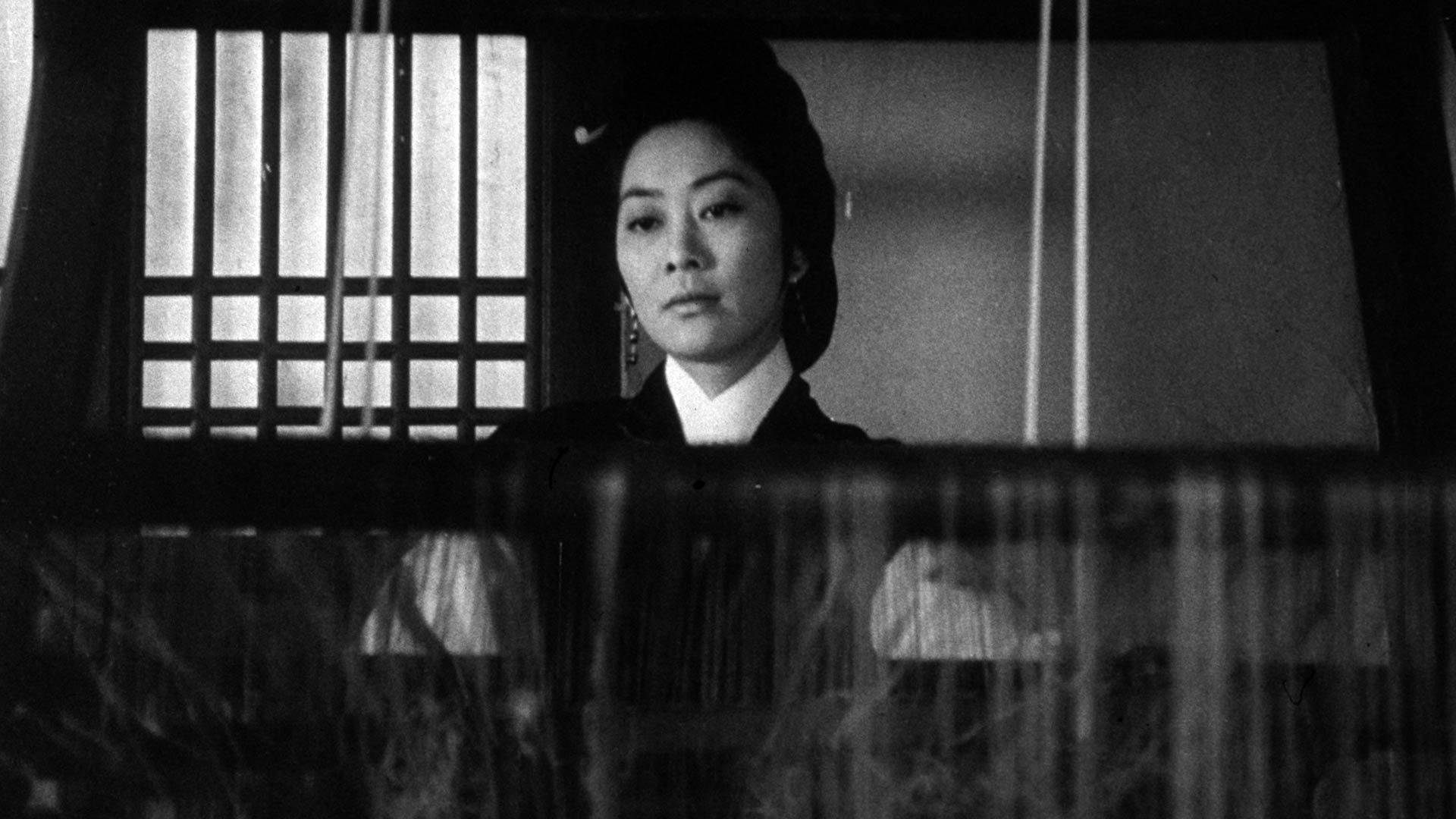
Set in 17th-century China, the film depicts a young widow, Madam Tung, who lives a celibate life with her mother-in-law and daughter. Admired for her virtue, Madam Tung is honored by the village with a triumphal arch in her name. Shot in Hong Kong, this poignant film reveals the cruelty of social pressures placed on a woman whose voice has been taken away.
Film Notes by Alice Shih
Shu Shuen Tang (T’ang Shushuen) may not be familiar to mainstream movie lovers or even cinephiles of Chinese cinema, but she was actually the first internationally recognized, award-winning independent filmmaker in Hong Kong. In addition, she also happened to be a woman at a time when the Chinese film industry was controlled by studios run by men like the Shaw Brothers. The studios would only finance commercial films … Tang’s debut film, Dong fu ren, was self-financed and shot in Hong Kong on a limited budget. It garnered four Golden Horse Awards in 1971 including Best Actress (Lisa Lu), Best Cinematography, Best Artistic achievement and, most important of all, the Special Jury Prize of Creative Innovation created and awarded to Tang for this film … In the late 1960s, after her studies at USC, Tang returned to Hong Kong to prepare for the shoot of her first feature, Dong fu ren. The film is set in 17th century China; its protagonist, Madame Tung, is a widow for whom a triumphal arch is to be erected by the king to honour her contributions to her village––the arch being an ancient Chinese symbol of honour. A conflict arises when a young officer is billeted in her house and proceeds to show romantic attachment to both Madame Tung and her daughter. Madame Tung must choose between her own desire and her duty as a widow and mother, a situation that foregrounds the cruelty of societal pressure on a woman whose voice has been taken away from her after the passing of her husband … a similar expression of female suppression had never before been seen in Chinese films … Although Tang had been immersed in the American film scene, Dong fu ren does not resemble a Hollywood production as one might expect. [The filmmaker once argued that] “the subject matter is actually very cinematic. When I finished writing the script I gave it to my professor at USC to read, and he said that it was not a filmable script, because it was about the interior feelings of a woman who had no outlet to express them, and the plot had too few characters. But that is exactly why I thought it is good material for the cinema!”
Copy from M+. Restored in 4K in 2025 by M+ at Silver Salt Restoration laboratory, from a 35mm print preserved by University of California, Berkeley Art Museum and Pacific Film Archive and from a 35mm print preserved by BFI National Archive. The restoration of The Arch is made possible by the support of CHANEL, M+’s Major Partner.
Presented by Archives on Screen
Archives on Screen (AoS) brings rare, unseen archival films from around the globe to Minnesota. Co-founded in 2022 by Michelle Baroody and Maggie Hennefeld, AoS has worked with international film archives and local film venues to expose students, diverse audiences, and underserved populations to the richness of cinema history. We screen everything from silent films to contemporary features, focusing primarily on counter-cinemas, such as feminist and queer films, world cinema, and anti-colonial productions. Our events facilitate public education, community engagement, and open conversation about how the archives of film history can help us to imagine different worlds and alternative futures. Archives on Screen’s flagship program, Il Cinema Ritrovato on Tour, is a curated selection of films from Il Cinema Ritrovato, an annual international film festival that exhibits new restorations and rediscovered films in Bologna, Italy every summer. We also host a quarterly screening series at the Trylon Cinema in Minneapolis and regular screenings at the Heights Theater and other local venues. Learn more about Archives on Screen at archivesonscreen.org
Relased 1968
Directed by T’ang Shushuen